
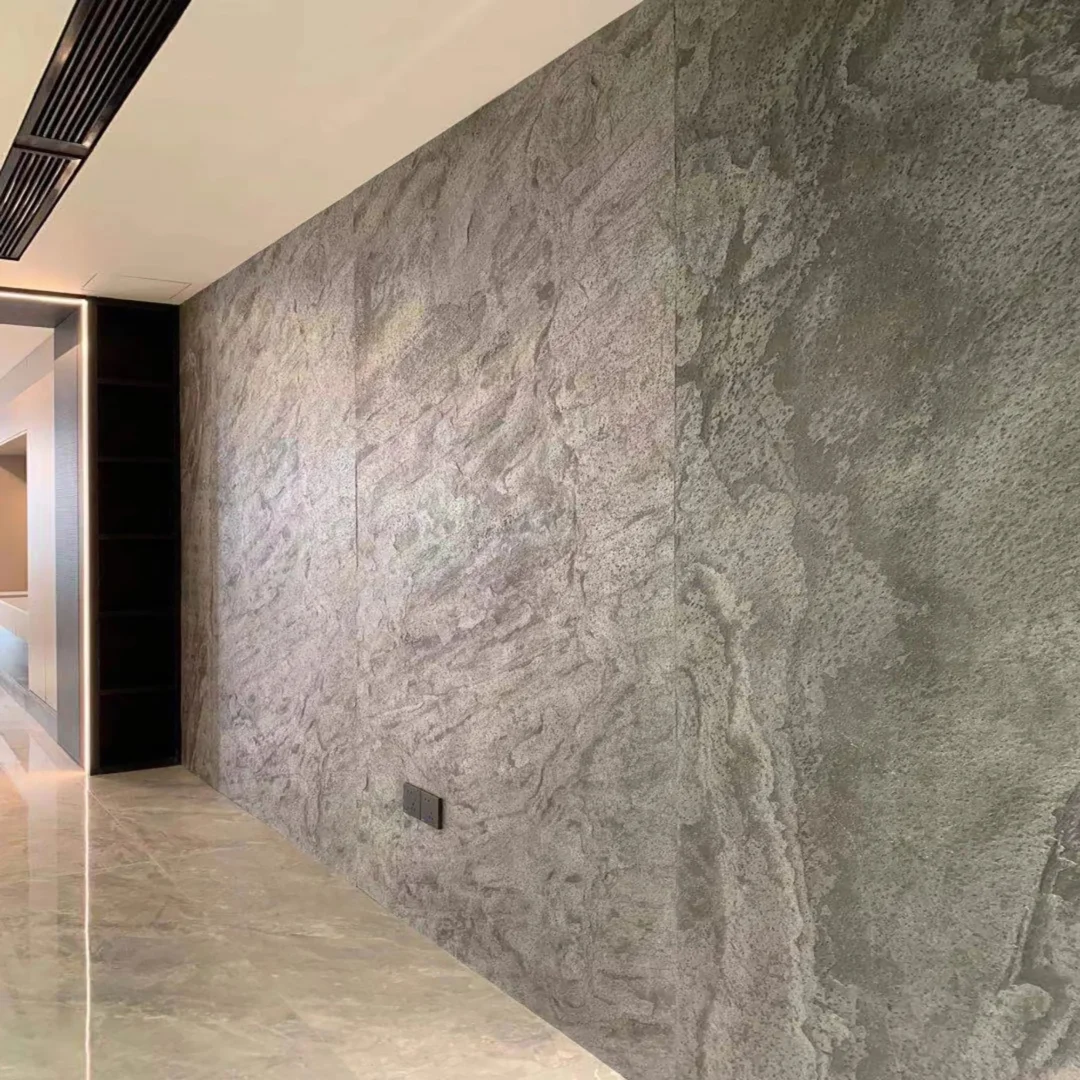
When planning home renovations or commercial space design, the choice of wall materials is crucial, directly impacting the overall aesthetics, user experience, and budget.
What are Wall Tiles?
Wall tiles are made from natural mineral raw materials such as clay and quartz sand through grinding, mixing, pressing, glazing, and sintering. They are hard, dense, and heavy, renowned for their superior durability and rich surface decorative effects.
What is Flexible Stone?
Flexible stone is a revolutionary wall decoration material. Its base layer is typically a composite of high-molecular polymers and natural stone powder, while the surface layer is a thin sheet of real natural stone or a stone-textured coating. Its core characteristic is “flexibility”—possessing the physical properties of being bendable and foldable.
Three Dimensions in-depth comparison to find your ideal type
- Appearance and Texture
Tiles: Mature technology, extremely rich selection. From mirror-like glossy tiles to non-slip matte tiles, from marble patterns to wood grain and cement patterns, they can mimic almost any style you desire. Cool and hard texture.
Flexible Stone: Emphasizes naturalness and authenticity. Because it originates from real stone, its textures are non-repeating, possessing a natural randomness and textural quality. It has a warm, smooth feel, closer to the rustic feel of raw stone. It excels at creating modern, wabi-sabi, and industrial styles.
- Physical Properties and Applicability
Ceramic Tiles:
Advantages: Extremely high hardness, super wear-resistant and scratch-resistant. Completely waterproof and moisture-proof, and extremely easy to clean, making it an excellent choice for high-frequency areas such as kitchens, bathrooms, and balconies.
Disadvantages: High rigidity, brittle, easily broken under heavy impact. Significant weight, requiring a strong base wall.
Flexible Stone:
Advantages: Excellent flexibility and impact resistance, not easily broken, even deforming without cracking when the wall slightly cracks. Extremely lightweight, placing less load on the wall.
Disadvantages: While the surface wear resistance is sufficient for wall use, it is generally not as good as high-quality ceramic tiles. Good waterproofing, but prolonged soaking may cause problems at the edges; proper sealing during construction is essential.
- Construction Difficulty and Cost
Tiles: The construction process is complex, requiring experienced installers to handle steps such as cement mortar laying, grouting, and sealing. The construction period is long, and the combined labor and material costs are high.
Flexible Stone: Its biggest advantage is its ease of installation. It is usually directly adhered using specialized adhesives, requiring a high degree of flatness in the substrate, but the construction speed is fast, and no complex cement mortar layer is needed. Overall, the unit price of the material may be higher, but labor and auxiliary material costs are often lower.
Flexible stone and wall tiles are not simply a matter of “one replacing the other,” but rather excellent competitors in different fields. Tiles are proven “functional guardians,” protecting spaces with the highest demands for durability and cleanliness; while flexible stone is a “pioneer of aesthetics and inspiration,” offering more possibilities and flexibility for modern design.