
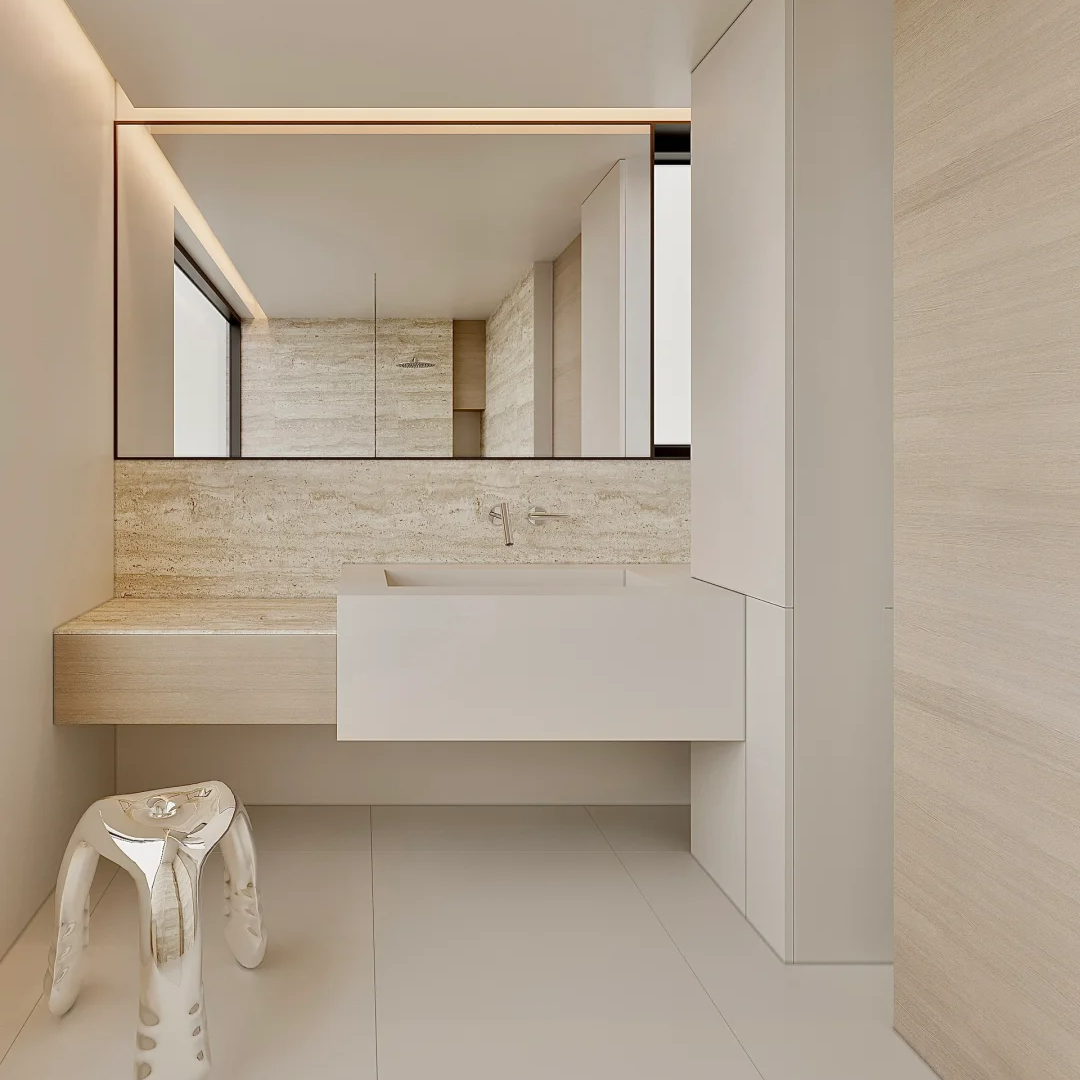
In modern spatial design, materials are no longer just surface finishes—they are part of the design language itself. The true value of soft stone lies in how it transforms stone from a heavy structural element into a tool for creative expression.
1. From Visual Weight to Light Spatial Expression
Traditional stone conveys solidity, permanence, and strength. Contemporary design, however, emphasizes:
- Visual lightness
- Clean, uninterrupted surfaces
- Minimal structural intrusion
Soft stone does not aim to replicate the physical weight of stone. Instead, it extracts the natural texture, depth, and organic character of stone, presenting them in a lighter, more flexible form that aligns with modern aesthetics.
2. Seamless Wall Design and Visual Continuity
Modern residential and commercial spaces increasingly favor:
- Large, continuous wall surfaces
- Reduced joints and visual breaks
Soft stone allows designers to create more unified wall expressions, making it ideal for:
- Hotel lobby feature walls
- Commercial statement walls
- Full-height residential living room walls
This seamless “stone wall” effect delivers a more refined and contemporary look than traditional segmented stone installations.
3. Freedom for Curves and Architectural Forms
Design trends are shifting away from rigid, linear geometry toward:
- Rounded corners
- Curved walls
- Flowing spatial transitions
Soft stone enables stone textures to extend naturally across:
- Columns
- Curved walls
- Transitional corners
The result is a more fluid, harmonious space where materials enhance movement rather than interrupt it.
4. Natural Texture as a Key Element in Minimalist Design
In minimalist, wabi-sabi, and nature-inspired interiors, design is driven less by decoration and more by material nuance, such as:
- Subtle texture variations
- Stone grain depth
- Light and shadow interaction
Soft stone acts as a quiet yet powerful design element, allowing walls to express emotion and depth without visual excess.
5. Design Efficiency in Commercial Spaces
Modern design also values:
- Project timelines
- Construction control
- Faithful execution of design intent
Soft stone supports a design philosophy that lets architects and designers focus on spatial expression, rather than being constrained by weight, complex structures, or installation limitations.
The design value of soft stone lies in its ability to free stone from physical weight and return it to what truly matters—texture, atmosphere, and spatial emotion.
It is not a replacement for traditional stone, but a material that aligns more naturally with contemporary design logic and creative freedom.