
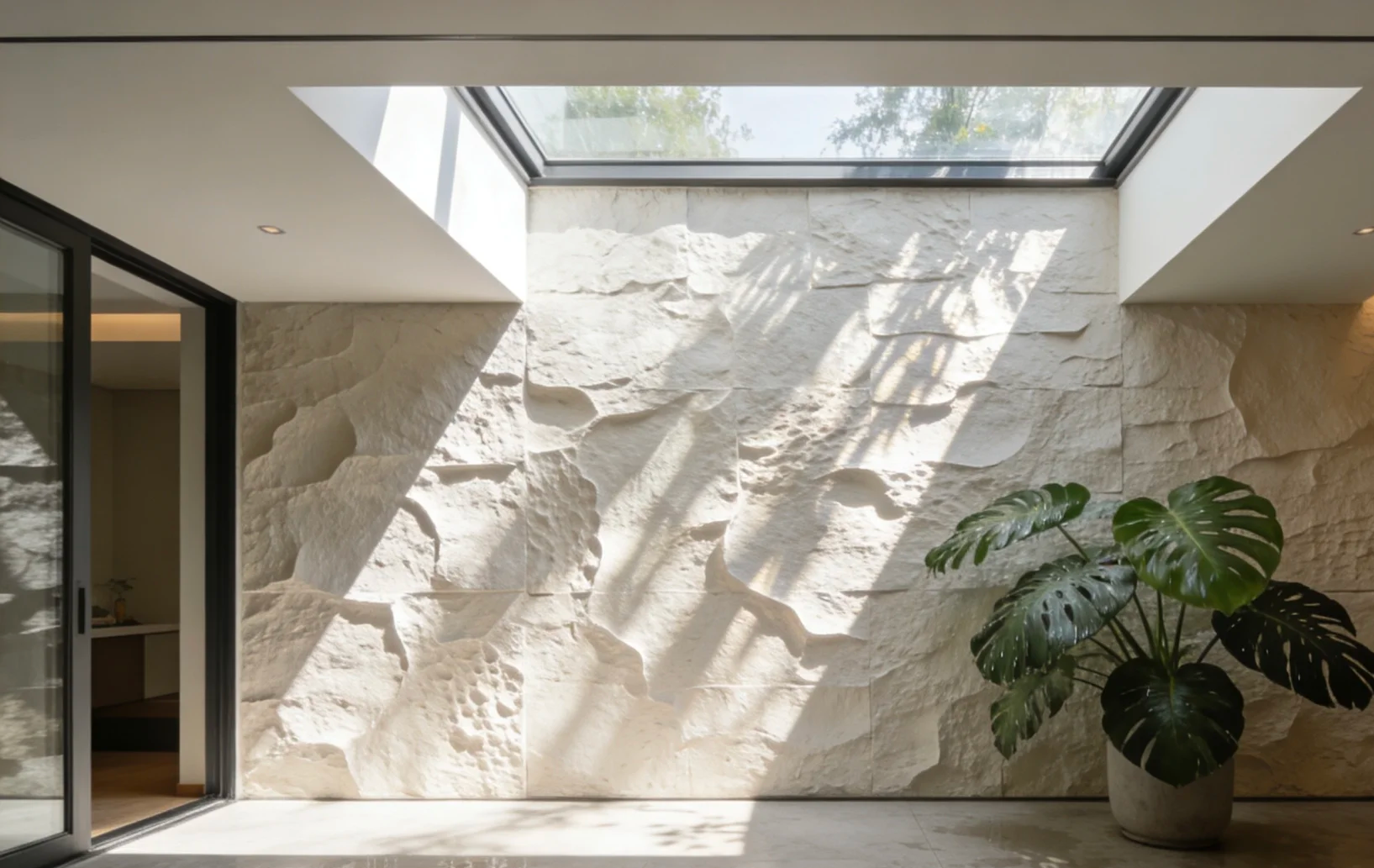
Choosing the right wall material is no longer just about appearance. For contractors, every material affects installation time, labor costs, transportation, and overall project efficiency. As construction schedules become tighter and clients expect high-quality finishes within shorter timelines, many professionals are replacing traditional stone with PU stone panels.
Their lightweight construction, quick installation, and realistic stone texture make them a practical solution for both residential and commercial projects.
Faster Installation Means Better Project Efficiency
Installation speed directly impacts labor costs and project schedules.
Unlike natural stone, which often requires extensive cutting, mortar application, and structural reinforcement, PU stone panels can be installed using construction adhesive, screws, or nails depending on the project requirements.
This streamlined installation process offers several practical advantages:
- Shorter construction schedules
- Reduced labor intensity
- Less on-site dust and waste
- Easier handling by installers
- Faster project completion
For renovation projects, where minimizing disruption is essential, these time-saving benefits are especially valuable.
Lightweight Materials Reduce Transportation and Handling Costs
Material weight influences every stage of a project—from shipping and unloading to on-site installation.
Because PU stone panels are significantly lighter than traditional stone, contractors can benefit from:
- Lower freight costs
- Easier transportation to upper floors
- Reduced lifting equipment requirements
- Simpler storage on construction sites
- Lower structural load on buildings
For international distributors and large-scale developments, these logistics advantages can contribute to substantial cost savings.
Consistent Appearance with Less Material Waste
Natural stone varies in color, thickness, and texture, which often requires additional sorting during installation.
PU stone panels are manufactured under controlled production conditions, providing:
- Uniform dimensions
- Consistent surface texture
- Stable color matching
- Predictable installation results
This consistency improves installation efficiency while reducing material waste and rework.
Suitable for Indoor and Outdoor Applications
Modern PU stone panels are designed to perform across a variety of environments.
Common applications include:
- Feature walls
- Villa exteriors
- Commercial façades
- Garden walls
- Restaurants and cafés
- Retail displays
- Hotel decoration
- Office interiors
Their versatility allows contractors to use one material across multiple project areas while maintaining a cohesive architectural style.
Lower Maintenance After Installation
Clients increasingly prefer materials that remain attractive with minimal maintenance.
Quality PU stone panels typically require only occasional cleaning to maintain their appearance. Unlike some natural stone surfaces, they do not require regular sealing or complex maintenance procedures.
This makes them particularly suitable for commercial spaces and high-traffic environments where long-term maintenance costs are an important consideration.
A Practical Choice for Renovation Projects
Renovation work often presents unique challenges, including limited construction time, existing structural constraints, and occupied buildings.
PU stone panels help simplify renovation by offering:
- Installation over suitable existing surfaces
- Reduced demolition requirements
- Minimal construction noise
- Lightweight materials for older structures
- Efficient installation in confined spaces
These characteristics make them an attractive option for upgrading residential and commercial interiors without extensive structural modifications.
What Contractors Should Consider When Selecting PU Stone Panels
To ensure reliable project performance, contractors should evaluate more than appearance alone.
Key considerations include:
- Surface texture realism
- Panel density and strength
- UV and weather resistance for exterior use
- Fire performance according to project requirements
- Manufacturing consistency
- Supplier production capacity
- Technical support and customization services
Working with an experienced manufacturer helps reduce project risks while ensuring stable product quality.