
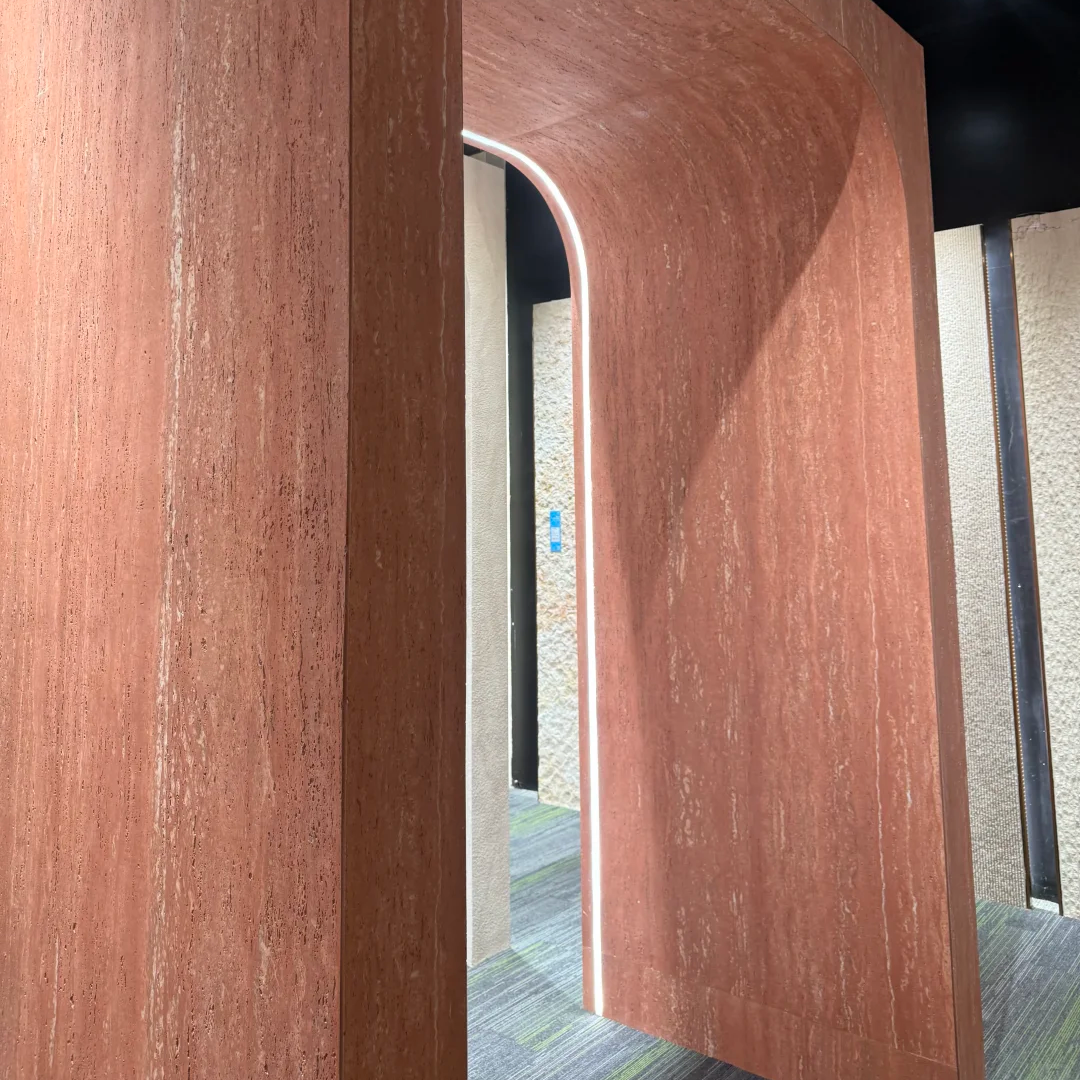
When it comes to wall cladding and architectural finishes, designers and builders often compare flexible stone (soft stone) with traditional natural stone. Both offer unique aesthetics, but their performance, installation process, and cost efficiency are very different.
In modern construction, the choice is no longer only about appearance—it is about weight, efficiency, durability, and installation cost.
What Is Flexible Stone?
Flexible stone (also known as soft stone or flexible stone veneer) is a new decorative wall material made from natural stone powder combined with a flexible backing layer. It replicates the look of real stone while being lightweight and bendable.
Key characteristics:
Ultra-lightweight compared to natural stone
Flexible and bendable for curved surfaces
Easy to cut and install
Natural stone-like texture and appearance
Suitable for both interior and exterior walls
This makes it especially popular for modern architectural renovation projects.
What Is Traditional Natural Stone?
Natural stone is quarried directly from the earth and processed into slabs or tiles for wall and floor applications. It is widely used for luxury buildings and premium architectural projects.
Key characteristics:
100% natural material
High density and strong durability
Premium and luxurious appearance
Heavy weight requiring strong structural support
More complex installation process
While it offers a timeless aesthetic, it also comes with higher construction demands.
Key Comparison: Flexible Stone vs Natural Stone
- Weight and Structure
Flexible stone is significantly lighter, making it easier to transport and install. Natural stone requires reinforced structures due to its heavy weight.
- Installation Efficiency
Flexible stone can be installed quickly using adhesive systems. Natural stone requires cutting, fixing, and professional labor, increasing installation time.
- Cost Performance
Flexible stone reduces both material handling and labor costs. Natural stone tends to be more expensive due to quarrying, transportation, and installation complexity.
- Design Flexibility
Flexible stone can be applied on curved surfaces, columns, and irregular walls. Natural stone is mostly limited to flat surfaces.
- Durability
Both materials are durable, but natural stone has slightly higher long-term structural strength. Flexible stone, however, offers excellent weather resistance for most architectural applications.
Application Scenarios
Flexible Stone is ideal for:
Interior feature walls
Building façades
Columns and curved surfaces
Renovation projects
Commercial wall decoration
Natural Stone is ideal for:
Luxury villas and high-end buildings
Large structural façades
Premium architectural landmarks
ECOUPP Flexible Stone Solutions
Flexible stone products are part of the ECOUPP new material system, designed for lightweight, efficient, and modern architectural applications.
Explore more: ECOUPP Official Website
Flexible stone and natural stone each have their own strengths. If your project values luxury and structural permanence, natural stone remains a classic choice. However, if you prioritize lightweight installation, cost efficiency, and design flexibility, flexible stone is often the more practical and modern solution for wall decoration.