
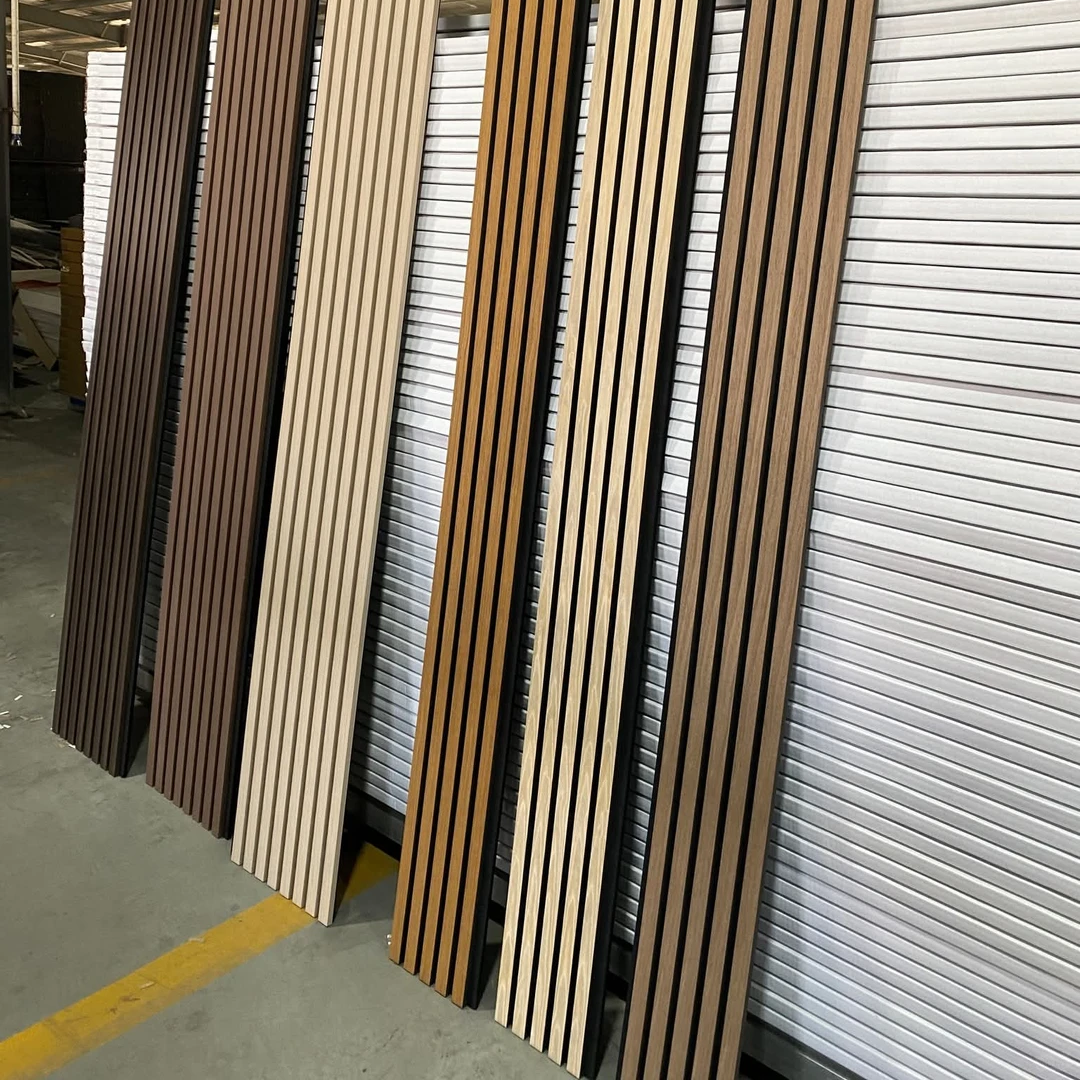
Acoustic slat panels are no longer just decorative wall materials — they’ve become an important part of modern interior projects. But when selecting panels, many buyers focus only on color and appearance, while ignoring the factors that truly affect performance and durability.
For residential, commercial, and hospitality projects, choosing the right acoustic slat panels means paying attention to material quality, surface finish, acoustic backing, and installation suitability.
Here are the most important points to consider before purchasing.
- Choose Panels Based on the Project Environment
Different spaces require different panel performance.
Residential Spaces
For living rooms, bedrooms, or home theaters, most projects prioritize:
Decorative appearance
Basic sound absorption
Easy installation
Standard MDF acoustic slat panels are usually suitable for these environments.
Commercial Projects
For offices, hotels, meeting rooms, and retail spaces, buyers should focus more on:
Durability
Better acoustic performance
Fire resistance
Long-term stability
Higher-density panels are recommended for commercial use.
Humid Areas
In humid climates or semi-outdoor spaces, moisture resistance becomes very important.
PVC-laminated or moisture-resistant panels perform better in:
Coastal areas
Humid interiors
Commercial environments
- Core Material Matters
The internal structure directly affects panel lifespan and stability.
Standard MDF
A cost-effective option suitable for standard decorative projects.
High-Density MDF
Provides:
Better durability
Stronger installation support
Improved resistance to deformation
This is often the preferred option for premium projects.
- Select the Right Surface Finish
The surface finish affects both appearance and practicality.
Melamine Finish
Easy to clean
Affordable
Consistent color performance
Suitable for most modern interiors.
Wood Veneer Finish
More natural texture
Higher-end appearance
Popular in luxury interiors
PVC Laminated Finish
Better moisture resistance
More durable surface
Suitable for commercial projects
- Don’t Ignore the Acoustic Felt Backing
The felt backing plays a major role in sound absorption.
Higher-quality polyester felt provides:
Better noise reduction
Improved acoustic comfort
More stable panel support
For offices and commercial spaces, thicker felt backing is often a better choice.
- Installation Structure Affects Performance
The installation method can improve both stability and acoustics.
Direct Wall Installation
Best for:
Decorative feature walls
Fast installation projects
Batten Installation
Creates an air gap behind the panels, helping improve sound absorption performance.
More suitable for:
Offices
Meeting rooms
Commercial interiors
- Choose Timeless Colors
Natural wood tones remain the most popular choice in modern interiors, including:
Oak
Walnut
Smoked wood
Matte black combinations
These finishes work well with:
Modern tiles
Stone surfaces
Minimalist interiors
WPC wall systems
Choosing the right acoustic slat panels is about more than appearance. Material density, surface finish, moisture resistance, acoustic backing, and installation structure all affect long-term performance.
For modern residential and commercial interiors, high-quality acoustic slat panels offer a balance of:
Decorative aesthetics
Acoustic comfort
Durability
Easy maintenance
Selecting the right specifications from the beginning helps create interiors that not only look modern, but also perform better over time.