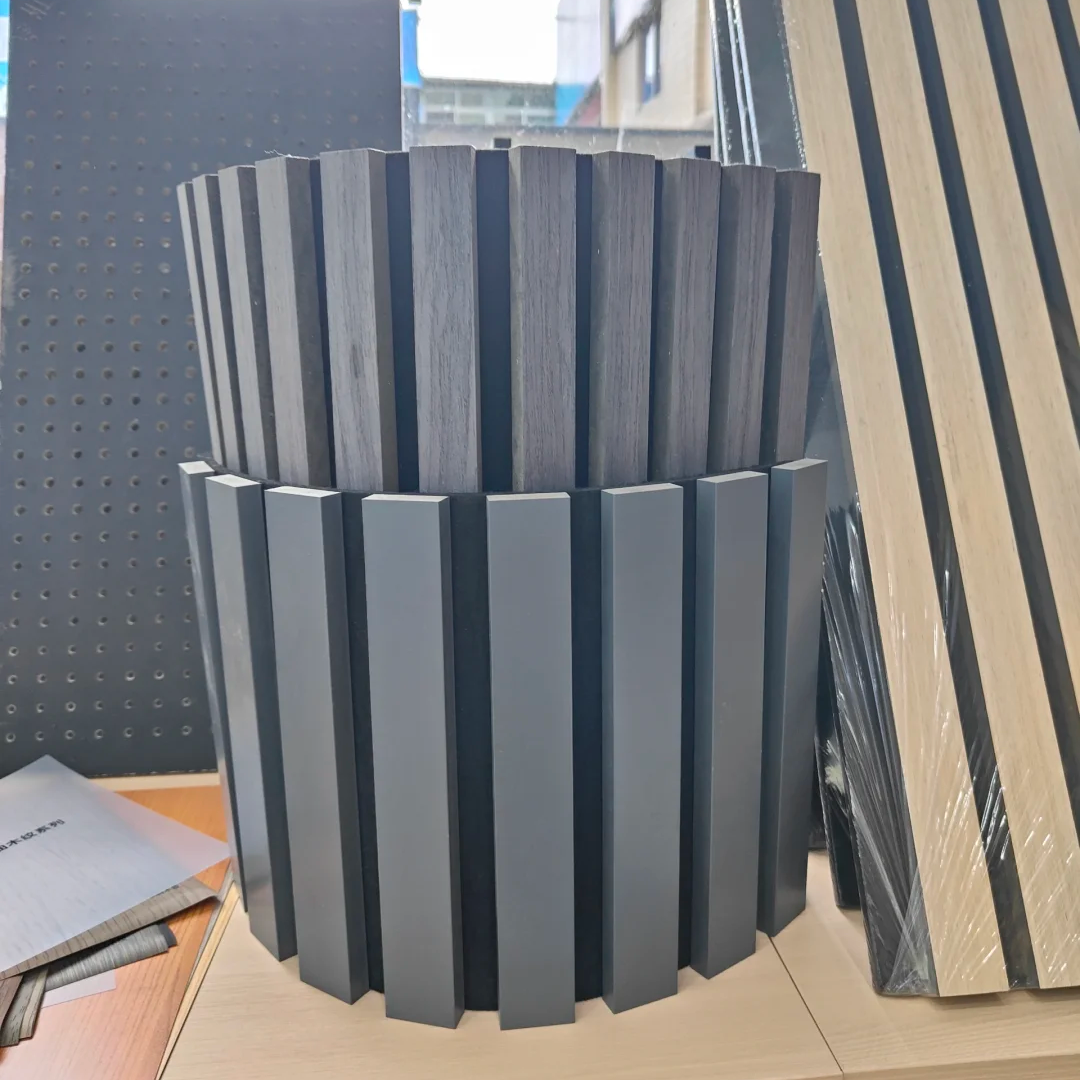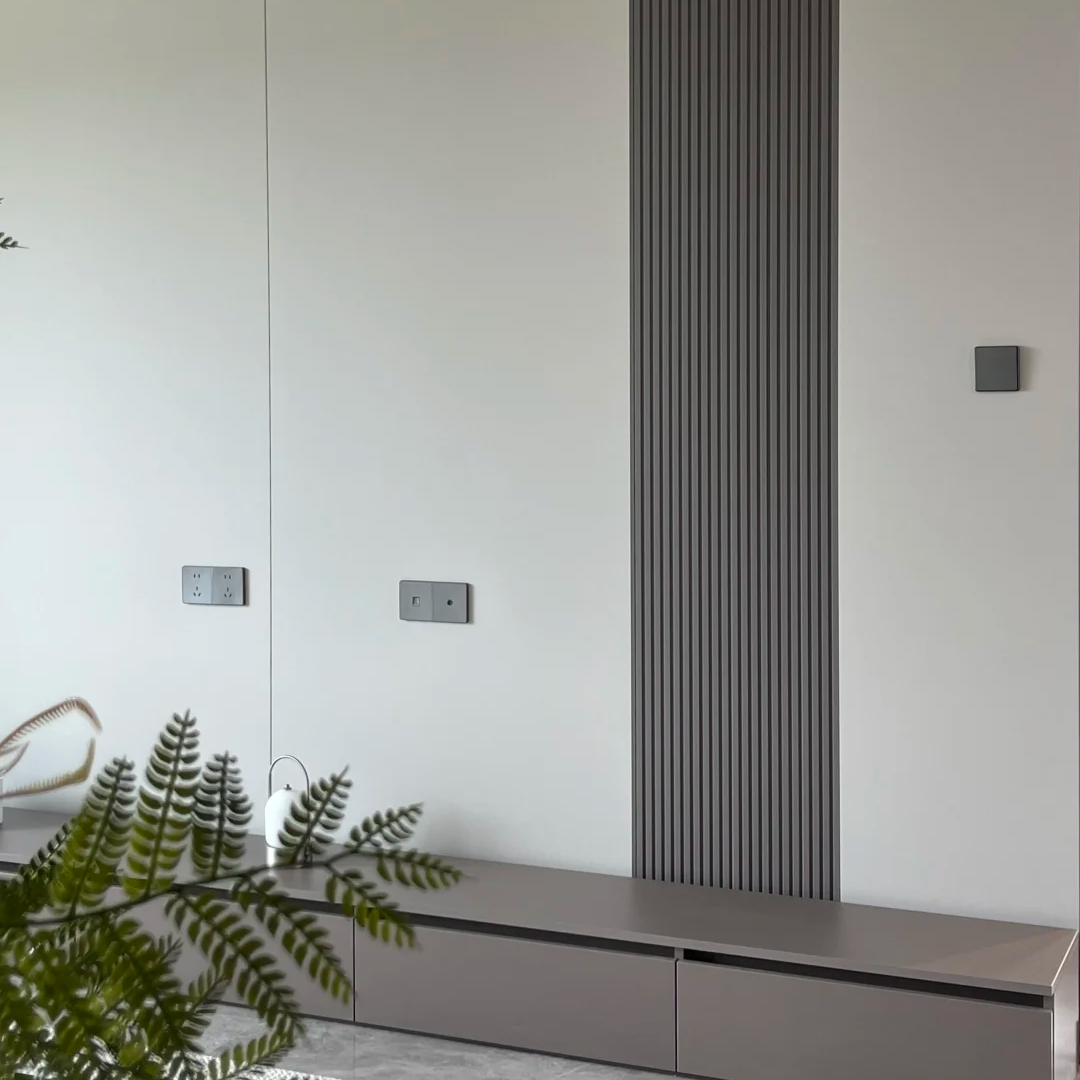

When selecting wooden acoustic panels, many people ask a key question:
“Does thicker mean better sound absorption?”
The answer is not a simple “yes” or “no.” Thickness does affect sound absorption, but it is not the only determining factor. Here’s a clear explanation of the relationship between wooden acoustic panel thickness and performance from a practical perspective.
1. How Do Wooden Acoustic Panels Absorb Sound?
Wooden acoustic panels generally consist of three parts:
- Wood surface panel (slotted or perforated)
- Internal air cavity
- Backing acoustic material (e.g., polyester fiber, acoustic cotton)
Sound waves enter the panel, pass through the slots or perforations, and are absorbed by the backing layer, converting sound energy into heat and reducing reflection and echo.
2. How Thickness Affects Sound Absorption
1. Thicker panels absorb more mid- and low-frequency sound
Thicker wooden acoustic panels usually have larger internal cavities, which improve absorption of mid- and low-frequency sounds. This creates a more natural and pleasant acoustic environment.
Hence, meeting rooms and home theaters often use thicker panels.
2. Thinner panels are effective for high frequencies
Thinner panels mainly reduce high-frequency echoes, suitable for offices, living rooms, or other everyday spaces. They can significantly reduce harsh reflections.
3. Thickness is not the only factor
Panels of the same thickness may perform very differently depending on:
- Slot or perforation design
- Density and type of backing material
- Installation method and presence of air gaps
Structural design often matters more than thickness alone.
3. Common Thickness Ranges and Suitable Applications
- 12–15 mm
Best for living rooms, offices, feature walls; mainly improves speech clarity and reduces echo - 18–21 mm
Suitable for meeting rooms, training rooms, and commercial spaces; provides more balanced absorption - ≥24 mm
Ideal for home theaters, recording studios, or spaces with high acoustic demands
These ranges are general guidelines; final choice should consider panel design and backing material.
4. Installation Also Impacts Performance
Even the correct thickness can underperform if installation is improper:
- Leaving an air gap between wall and panel improves absorption
- Surface-mounted vs. batten-mounted installation can change results
- Filling the cavity with acoustic cotton significantly enhances performance
In many cases, thickness + structure + installation together determine final effectiveness.
The relationship between wooden acoustic panel thickness and sound absorption is ultimately a combination of structure, thickness, and installation method.
Choosing the right thickness with proper design and installation ensures the acoustic panel delivers optimal performance for your space.