
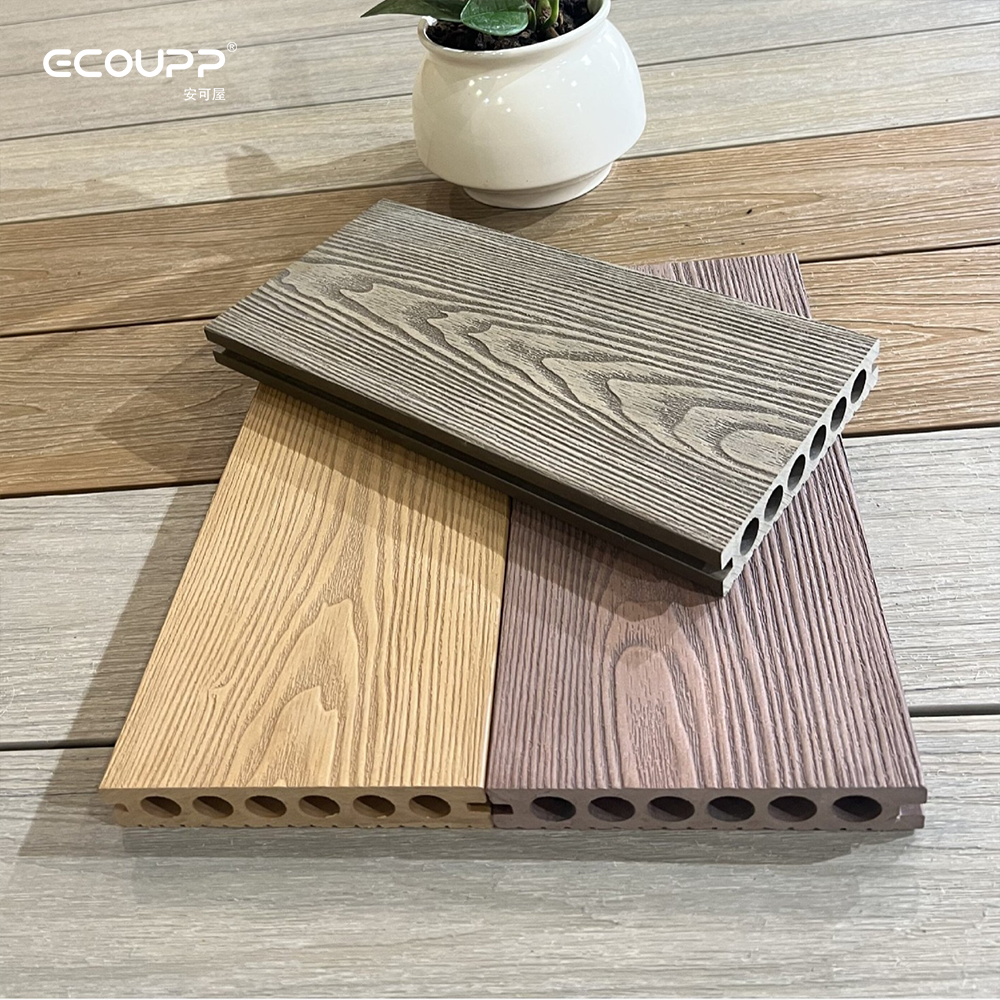
Last summer, Felix laid out a slab of treated wood for his backyard patio. The materials cost less than six thousand yuan, and he felt he’d made a smart move—the same area would have cost his neighbor twelve thousand yuan for WPC flooring, double the price.
The first month was wonderful. The texture of the wood, the aroma of freshly sawn timber, weekend barbecues, kids running barefoot.
Three months later, the first cracks appeared on the patio. Six months later, several planks warped, creaking underfoot. A year later, Mr. Zhang is sanding, painting, and patching the cracks. He says, “Every fall I have to spend two days tending to this flooring. In the end, my weekends cost more than the flooring.”
This is the truth we’re rarely told: the true cost of outdoor flooring is never on the label.
Most people only look at one number when buying outdoor flooring: the price per square meter.
Preservative-treated wood: 200–300 RMB/㎡
WPC flooring: 400–800 RMB/㎡
The conclusion is simple: WPC is too expensive.
However, this calculation misses three key variables:
Maintenance costs (material costs + time)
Replacement costs (removing old flooring + buying new flooring + reinstallation)
Hidden costs (How much is your time worth?)
WPC is not “more expensive flooring,” but rather “a product with a different logic.”
Traditional outdoor flooring, such as preservative-treated wood, follows the logic of consumables—you know it will deteriorate when you buy it; it’s just a matter of time.
WPC flooring, on the other hand, follows the logic of durable goods—you expect it to last you ten or twenty years, requiring almost no maintenance.
This isn’t a matter of price; it’s about two completely different consumer philosophies.
The Hidden Contract of Preservative-Treated Wood:
“I’ll sell it to you cheaply, but you have to promise me: repaint it every year and replace it every few years. I’ll remind you with cracks and mold—you owe me.”
WPC’s Public Promise:
“Pay upfront, and I’ll shut up. You can just sit there and drink coffee, and never think about me again.”
Which contract would you choose?
Things Nobody Tells You: WPC Flooring Isn’t “Perfect,” But It Does One Thing Right
I must be honest: WPC flooring isn’t without its flaws.
It’s more expensive than wood (initially).
It doesn’t feel as soft underfoot as top-quality solid wood.
Darker colors will get slightly hotter than wood at extreme temperatures.
Some lower-quality WPC will fade or warp.
However, WPC does one crucial thing right: it completely removes the verb “maintenance” from your outdoor living dictionary.
This means:
You don’t need to learn to distinguish which anti-corrosion paint is better.
You don’t need to kneel on the floor sanding in 35-degree summer heat.
You don’t need to worry about termites, mold, and rain every year.
You don’t need to face the dilemma of “to replace or not to replace” in the fifth year.
This is the true meaning of “smart choice”: choosing a lifestyle that eliminates the need for further choices.
Conclusion:
If you only consider material costs, WPC seems expensive.
But if you factor in the time, effort, and emotional costs—WPC might be your most worthwhile investment this year.